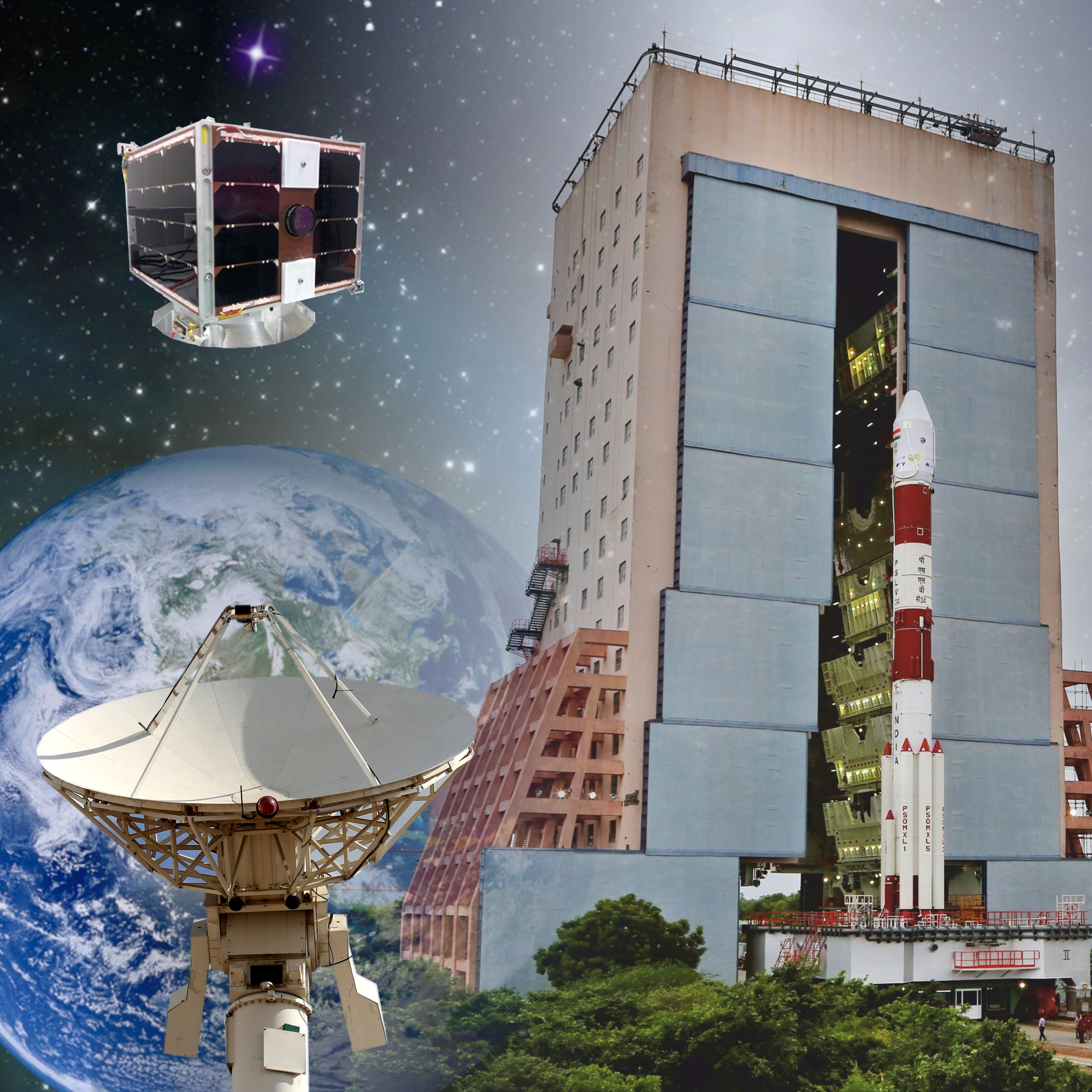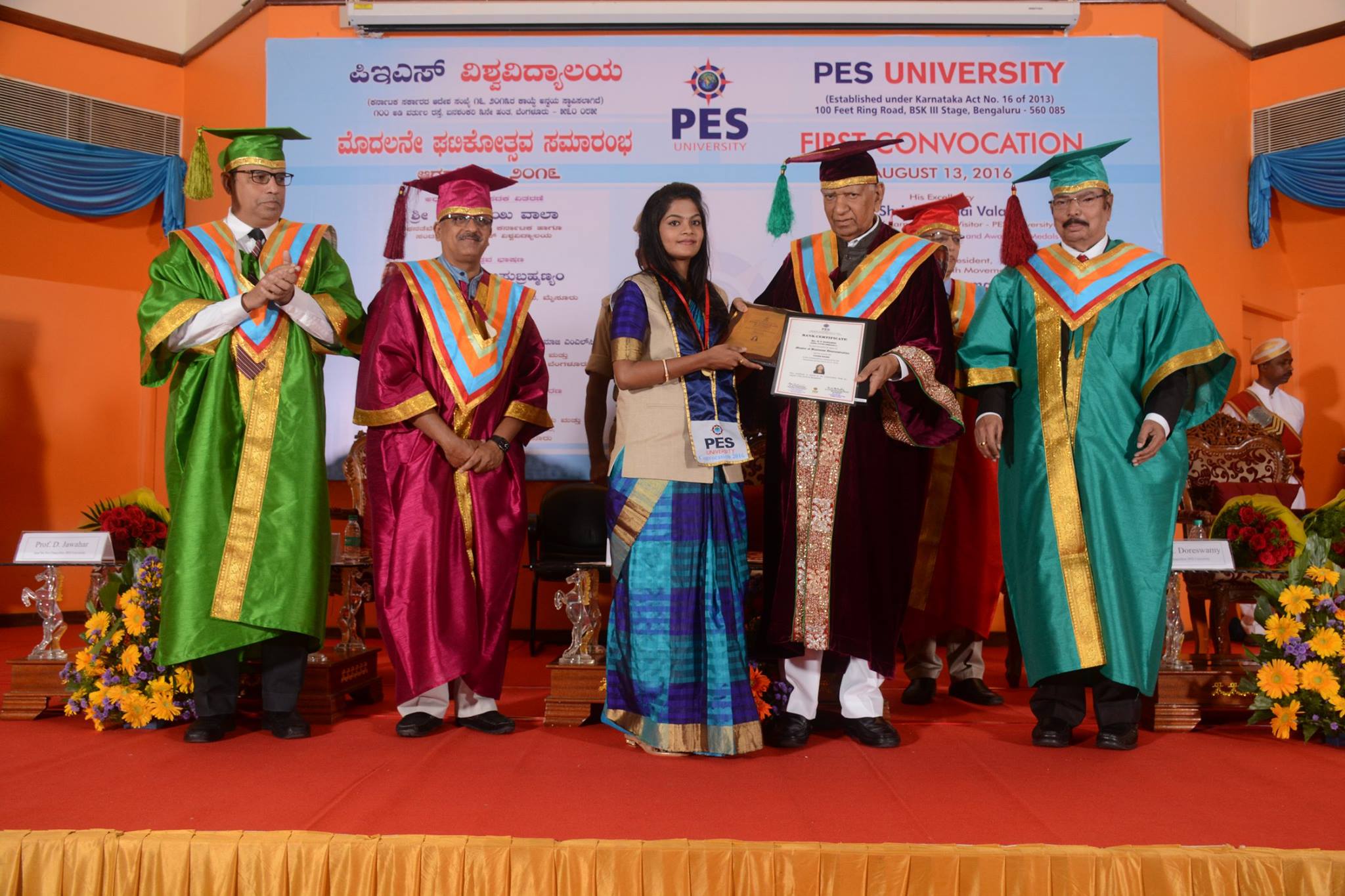


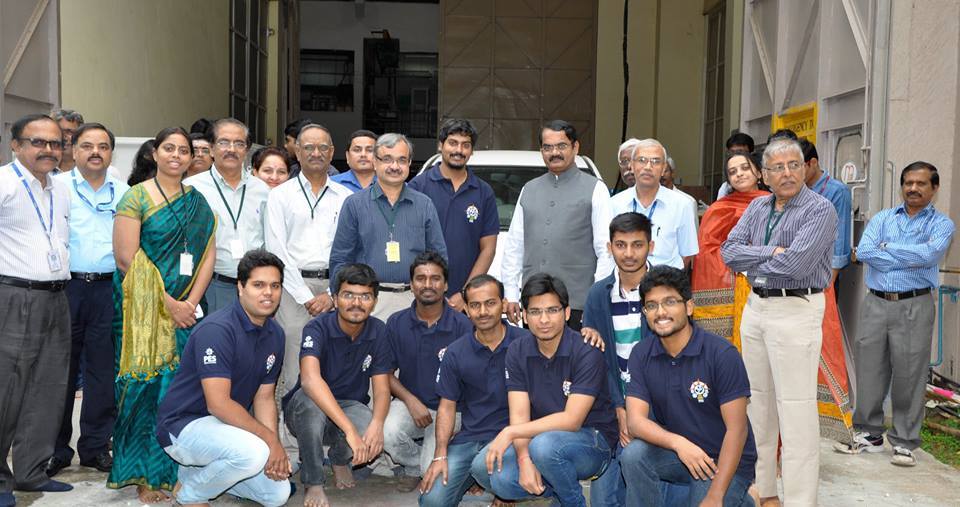
PISAT, the nanosatellite designed and developed at PES University is all set to be launched. The journey to the launchpad at Sriharikota from the ISRO Satellite Centre in Bengaluru was flagged off by Mylswamy Annadurai, director of ISRO. The 35th Polar Satellite Launch Vehicle (PSLV) rocket will launch PISAT. Wishing the students, Mylswamy Annadurai said that it is a special day for ISRO satellite centre. While congratulating the students and their mentors, Chancellor, Dr. M R Doreswamy stated that the university is planning to develop more satellites to help address the problems of common man.
A consortium of 250 students from 5 colleges under the guidance of PESU mentors in designed and developed the 3-axes stabilized imaging nano satellite. The custom made cuboidal structure of 5 kg carries an imaging camera as payload to capture the earth imagery of large areas at high resolution. The telecommand, telemetry and payload data transmission are carried out with S-Band RF Communication System. Sophisticated error detection and error correction coding techniques ensure reliable link performance. The active magnetic control system and advanced sun sensors are used for estimating attitude errors and magnetic torquer rods are used as actuators for attitude maintenance. High performance digital circuitry with sophisticated micro-controllers and interfaces enable smooth operation of the satellite. Modular software is embedded for attitude determination and control functions and payload operations. Body mounted solar cells generate 13W of power for charging the onboard battery with converters generating necessary supplies to various subsystems. PISAT is planned to be launched in a low earth polar sun synchronous orbit at an altitude of 680 km with a precise inclination. The mission operations are supported by an S-Band ground station commissioned at PES University campus.
After stringent performance and quality tests by expert committee, the nanosatellite was formally handed over to ISRO at a function on the campus attended by top officials from the government and ISRO on April 20, 2016. Capable universities and institutions venture into space technology on-orbit with guidance and support from ISRO. PES University spearheaded the design, development, fabrication and testing functions for the nanosatellite.
1
people liked this
Click the heart to show your appreciation